Current Projects
The Wounded, the Dying, and the Dead: Medicine and Surgery at Gettysburg.
This upcoming book examines the medical and surgical realities of the Battle of Gettysburg through remarkable individual cases, primary sources, and insights from a modern vascular surgeon. Below are previews of some of the most extraordinary stories.
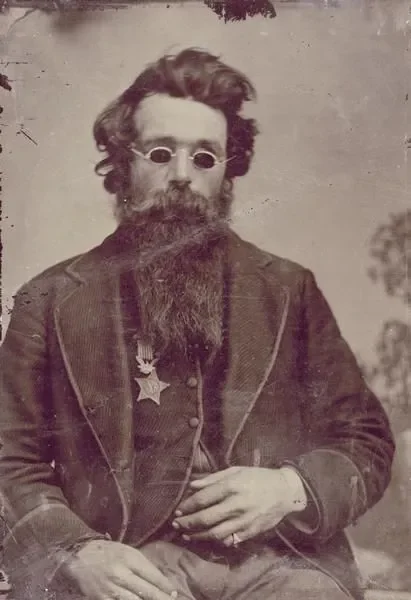
1. Shot Through Both Eyes and Bayoneted at Gettysburg
The Extraordinary Survival of Sgt. Francis Jefferson Coates
One of the most harrowing medical and surgical cases of the Battle of Gettysburg involved 20-year-old Sgt. Francis Jefferson Coates of Company H, 7th Wisconsin, the Iron Brigade.
During the fight in Herbst’s Woods on July 1, 1863, a minie ball passed through both of his eyes, destroying them. He was then bayoneted. A sympathetic Confederate officer placed him beneath a tree, and Coates survived.
At the battlefield Seminary Hospital, and then at Satterlee Hospital in Philadelphia, Coates’ wounds were treated with dressing changes and debridement of bone fragments. For his bravery, he received the Medal of Honor in 1866.
Despite total blindness, Coates learned to read Braille, made brooms for a living, married, and fathered five children. He passed away in 1880.
.

Herbst’s Woods - the site of Sgt. Coates’ wounding - today
2. Hit in the head at Plum Run, his brain exposed, and yet he survived.
The Exceptional Life and Unlikely Survival of Albert Sebers
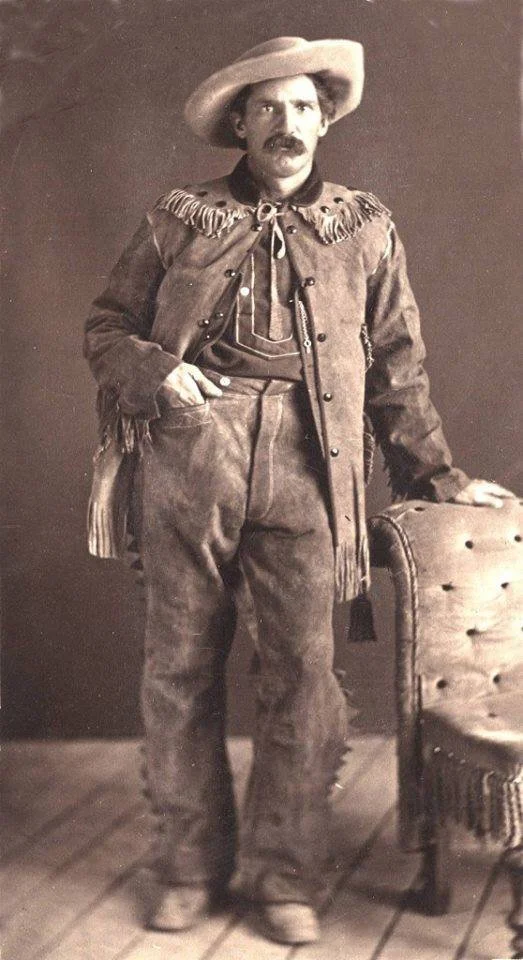
One of the most remarkable medical stories of the Battle of Gettysburg involved 20-year-old Private Albert Sebers of Company B, 1st Minnesota.
During his regiment's desperate, heroic charge on the evening of July 2, 1863, a fragment of shell struck the top of Sebers' head and fractured the parietal bone. A bullet also struck his left leg, destroying the head of the fibula.
Sebers was taken to the Seminary Hospital on the battlefield. His leg became infected and had to be drained. After he was transferred to a general hospital, a small piece of destroyed bone was removed from his skull, and brain tissue extruded from the opening. He suffered only intermittent dizziness, and the wound slowly healed. By December, it was covered with scalp and hair. His leg healed as well. Incredibly, he had survived.
After the war, Sebers went West. He became one of the most famous frontier scouts in American history (see photo). As Chief of Scouts for General George Crook, he played a major role in the Apache Wars. Sebers died in 1907 when a falling boulder struck him while he supervised construction of the Roosevelt Dam.
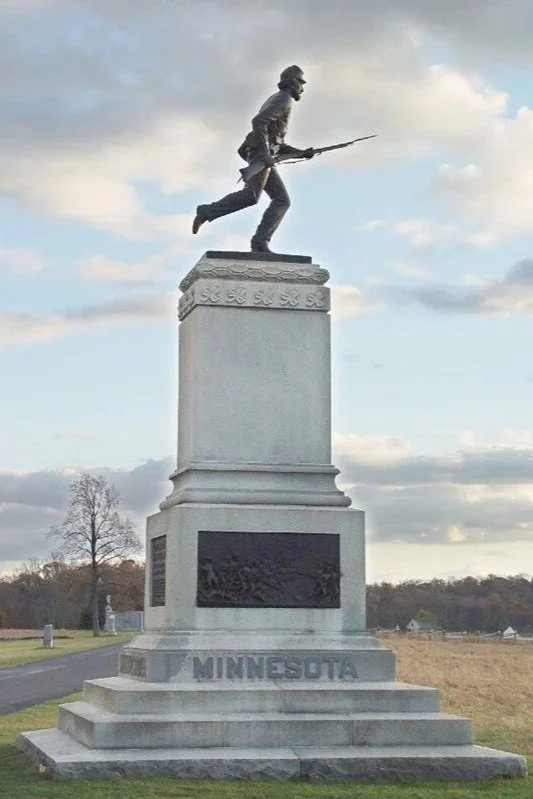
The 1st Minnesota monument, where Pvt. Sebers and his comrades charged on the evening of July 2, 1863
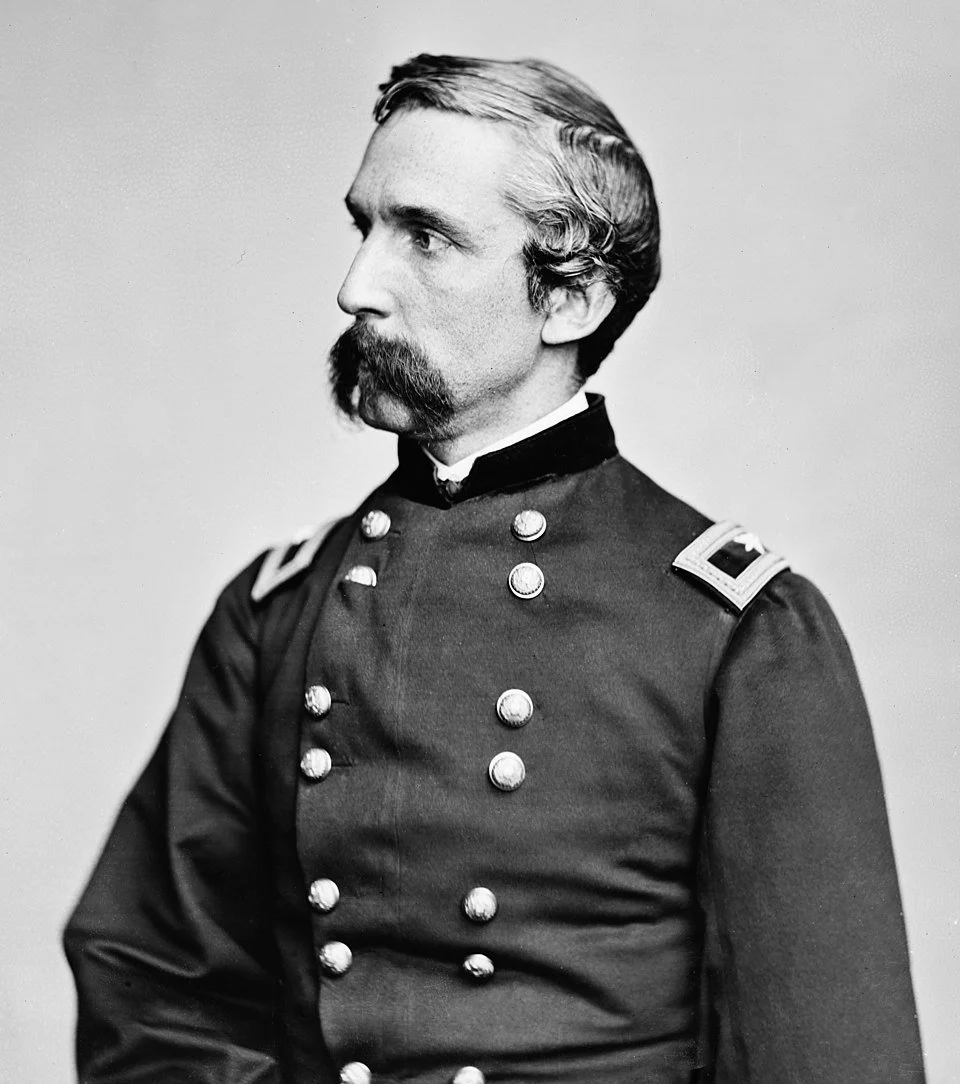
3. The Silent Tribulation of a Hero
Joshua L. Chamberlain may have saved the Union, but he suffered a grievous wound in his service that would have life-long consequences.
Joshua Chamberlain Joshua L. Chamberlain is one of the most recognizable figures of the Civil War, and most who know his story know that he was wounded at Petersburg. Far fewer understand the exact nature of that wound—or the ordeal that followed him for the rest of his life.
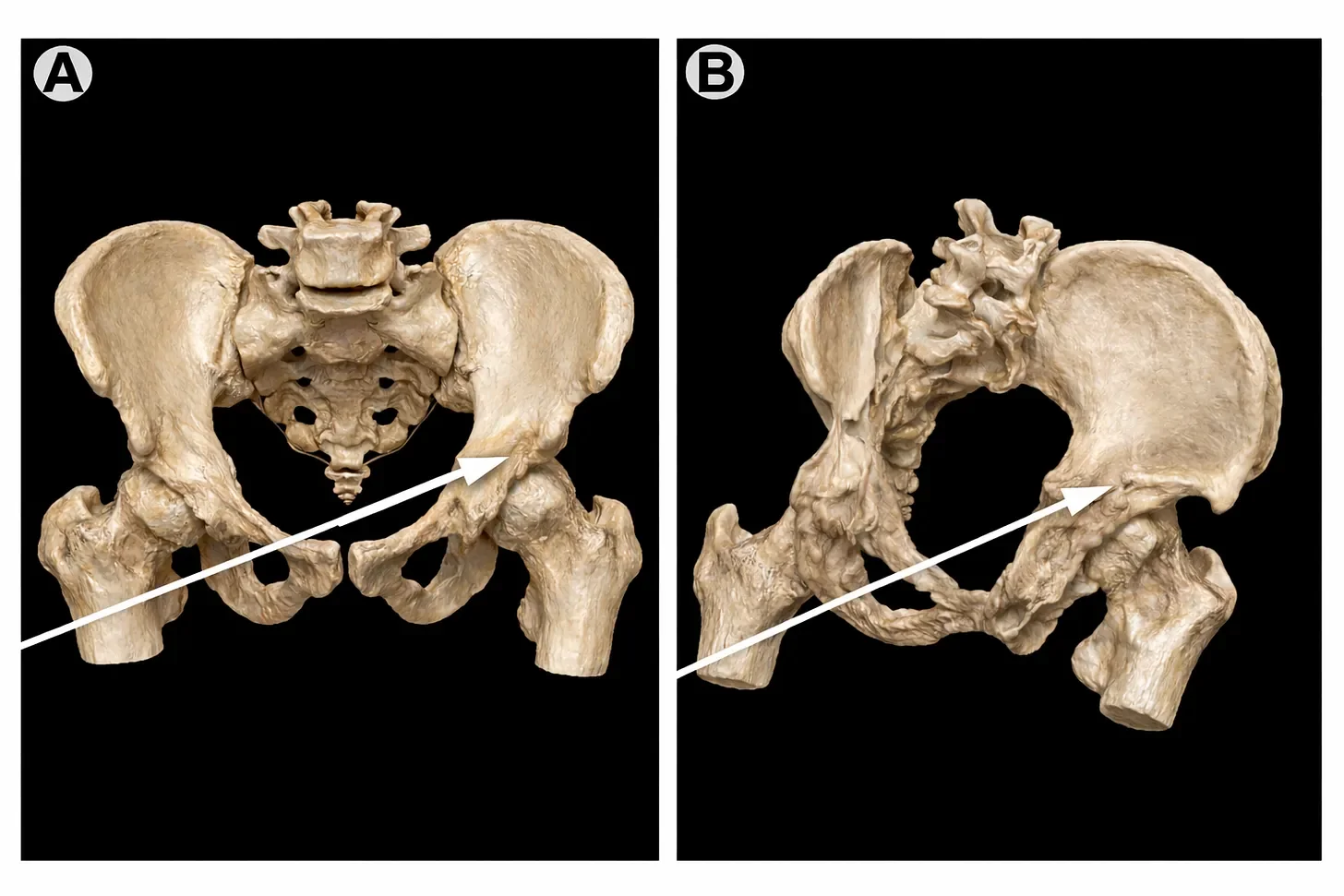
Chamberlain was shot in the pelvis while leading his troops on the afternoon of June 18, 1864. He lay on the field for roughly an hour, fearing that he would bleed to death. He later wrote, “I am not of Virginia blood, but she is of mine.”
When finally carried to the field hospital of the 1st Division, V Corps, the attending surgeon probed the wound and removed the bullet from beneath the skin on the left side. His judgment was stark: the wound was mortal.
A pension surgeon later recorded the bullet’s trajectory with precision:
“The ball entered the right hip in front of and a little below the right trochanter major, passed diagonally backward…and posteriorly to the left great trochanter.”
Chamberlain’s brother Tom soon arrived with the surgeon of the 20th Maine, Dr. A. O. Shaw, accompanied by Surgeon M. W. Townsend of the 44th New York. Together they decided that the wound must be explored and whatever could be done, done immediately. Chamberlain later recalled that, despite anesthesia, “I never dreamed what pain could be and not kill a man outright.”
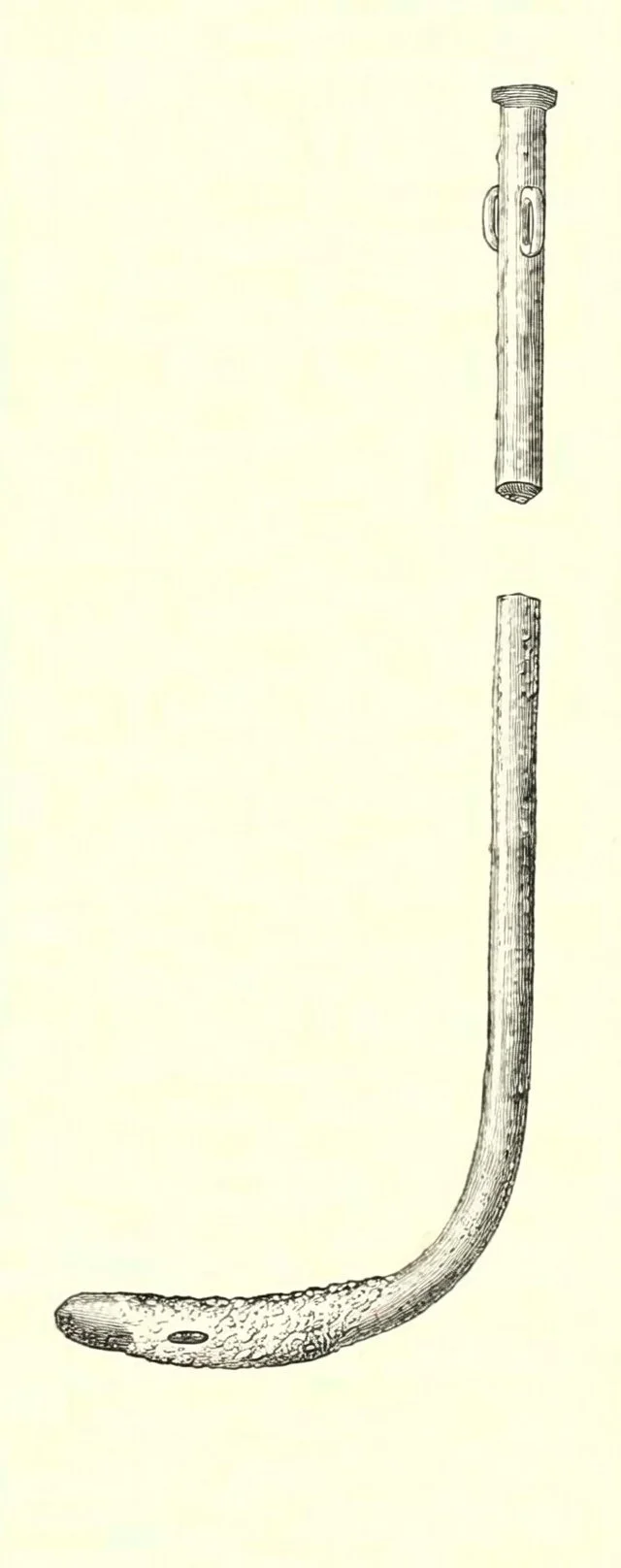
Neither surgeon left a surviving account, but from Chamberlain’s own descriptions—and from the course that followed—it is likely that a rigid urinary catheter was placed across the area of urethral injury during this initial operation. The effect was immediate relief, though the wound was still believed to be fatal.
That night, hearing of Chamberlain’s apparently mortal injury, Gen. Ulysses S. Grant promoted him to brigadier general “on the spot”—an act intended to honor a dying officer.
The next day he was carried by litter-bearers some sixteen miles to City Point and evacuated by water to the military hospital at Annapolis, Maryland. Against all expectations, he survived—and eventually returned to active field service.
Survival, however, did not mean recovery.
In September 1864, Chamberlain’s surgeon at Annapolis sent to medical headquarters a catheter used in his care, calling attention to the heavy phosphate encrustations upon it and warning of the danger they posed. The Medical and Surgical History of the War of the Rebellion later recorded the findings of an 1873 examination:
“He very often suffers severe pain in the pelvic region. The chief disability resulting indirectly from the wound is the existence of a fistulous opening of the urethra, half an inch or more in length, just anterior to the scrotum; this often becomes inflamed. The greater part of the urine is voided through the fistula, the fistula itself resulting from too long or too continuous wearing of a catheter.”
This urinary fistula—attributed by his physicians not to the Confederate bullet itself, but to prolonged use of a rigid indwelling catheter—became a lifelong affliction. Recurrent infection, obstruction, pain, and four additional unsuccessful corrective operations would follow.
And yet, remarkably, Chamberlain overcame these disabilities not only to resume military command, but to live a long public life. After the war he served four terms as Governor of Maine and later became President of Bowdoin College—roles carried out while enduring chronic pain, urinary dysfunction, and recurrent illness.
In 1914, Chamberlain died of sepsis from a urinary tract infection. The wound he sustained at Petersburg fifty years earlier had finally finished its work—but not before he had shown how courage, endurance, and public service can coexist with profound physical suffering.
A short video on the life and wounding of Chamberlain.
Read the primary sources and full medical analysis through the eyes of a modern surgeon free on Substack →